





幻中有真
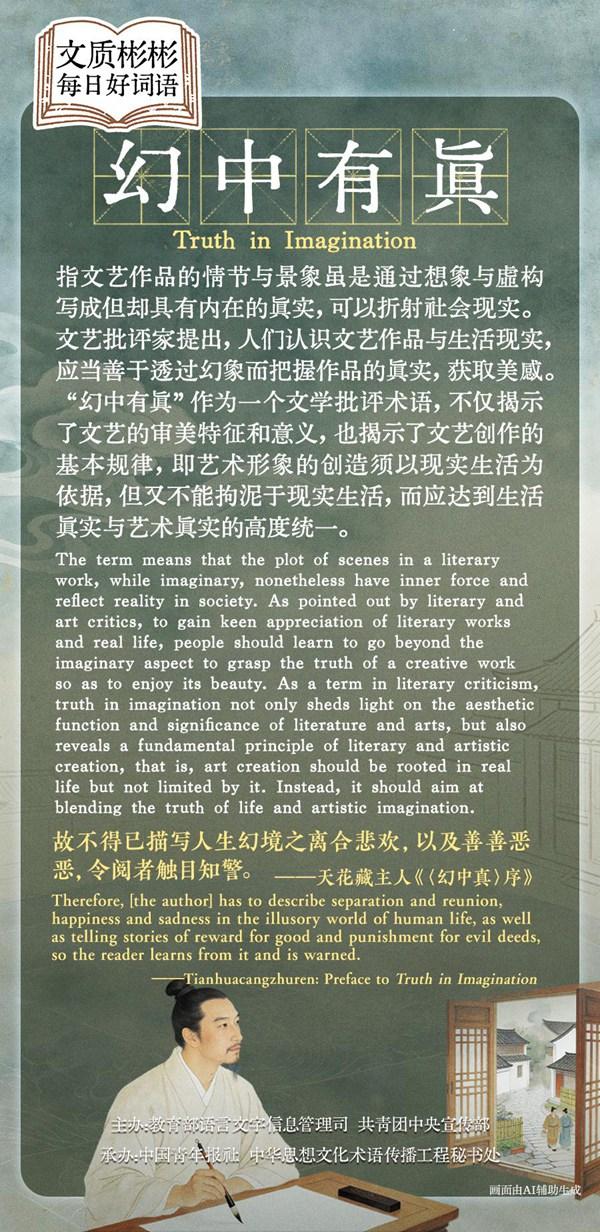
指文艺作品的情节与景象虽是通过想象与虚构写成但却具有内在的真实,可以折射社会现实。文艺批评家提出,人们认识文艺作品与生活现实,应当善于透过幻象而把握作品的真实,获取美感。“幻中有真”作为一个文学批评术语,不仅揭示了文艺的审美特征和意义,也揭示了文艺创作的基本规律,即艺术形象的创造须以现实生活为依据,但又不能拘泥于现实生活,而应达到生活真实与艺术真实的高度统一。
Truth in Imagination
The term means that the plot of scenes in a literary work, while imaginary, nonetheless have inner force and reflect reality in society. As pointed out by literary and art critics, to gain keen appreciation of literary works and real life, people should learn to go beyond the imaginary aspect to grasp the truth of a creative work so as to enjoy its beauty. As a term in literary criticism, "truth in imagination" not only sheds light on the aesthetic function and significance of literature and arts, but also reveals a fundamental principle of literary and artistic creation, that is, art creation should be rooted in real life but not limited by it. Instead, it should aim at blending the truth of life and artistic imagination.
引例
故不得已描写人生幻境之离合悲欢,以及善善恶恶,令阅者触目知警。(《〈幻中真〉序》)(因此不得已通过虚构描写人生离合悲欢的情境,以及善得善报、恶得恶报的各种故事,让读者读到这些之后懂得警醒。)
Therefore, [the author] has to describe separation and reunion, happiness and sadness in the illusory world of human life, as well as telling stories of reward for good and punishment for evil deeds, so the reader learns from it and is warned. (Preface to Truth in Imagination)
来源:中国青年报
2026年06月12日 01版
 放大
放大 缩小
缩小 全文复制
全文复制 上一篇
上一篇