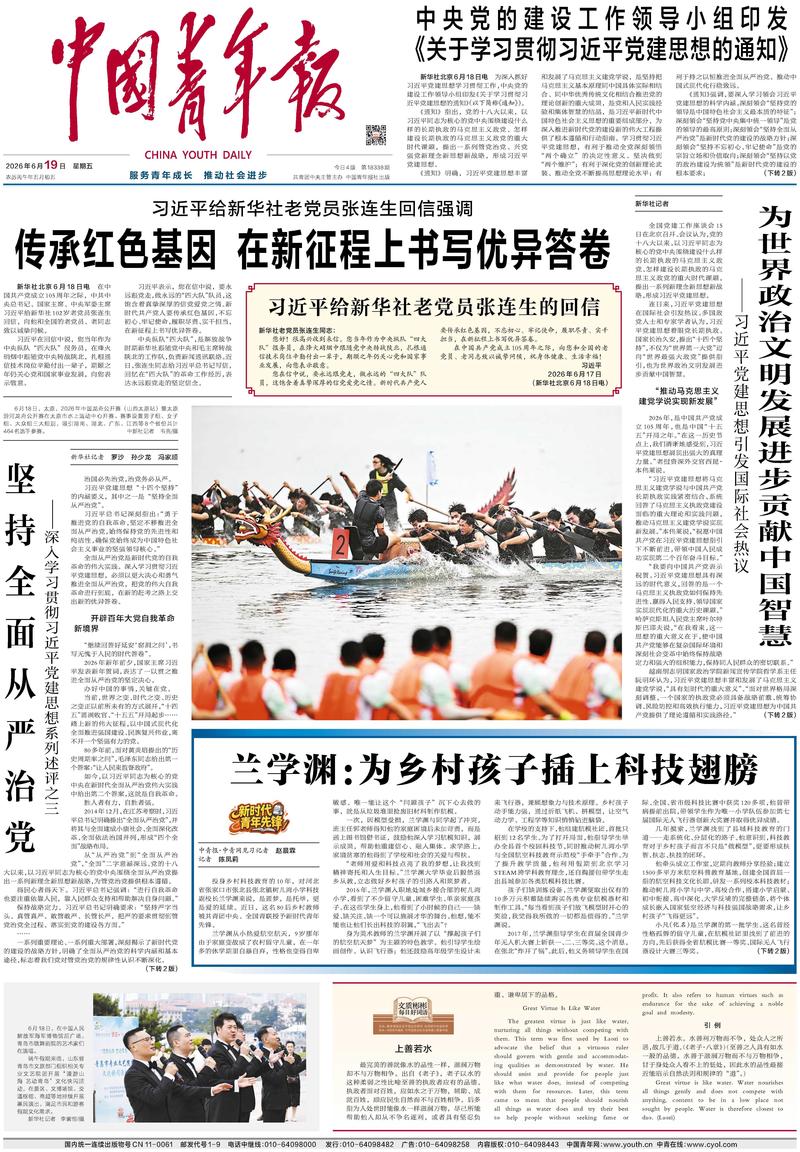






上善若水
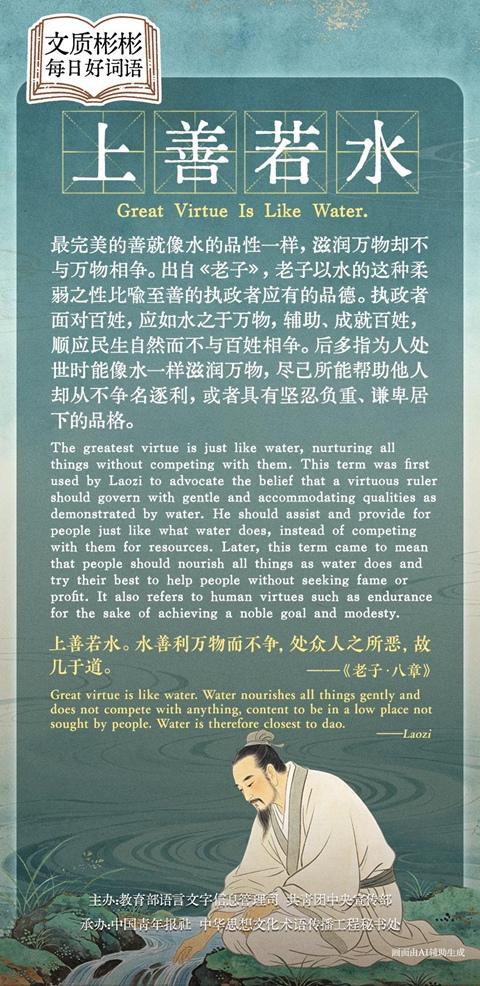
最完美的善就像水的品性一样,滋润万物却不与万物相争。出自《老子》,老子以水的这种柔弱之性比喻至善的执政者应有的品德。执政者面对百姓,应如水之于万物,辅助、成就百姓,顺应民生自然而不与百姓相争。后多指为人处世时能像水一样滋润万物,尽己所能帮助他人却从不争名逐利,或者具有坚忍负重、谦卑居下的品格。
Great Virtue Is Like Water
The greatest virtue is just like water, nurturing all things without competing with them. This term was first used by Laozi to advocate the belief that a virtuous ruler should govern with gentle and accommodating qualities as demonstrated by water. He should assist and provide for people just like what water does, instead of competing with them for resources. Later, this term came to mean that people should nourish all things as water does and try their best to help people without seeking fame or profit. It also refers to human virtues such as endurance for the sake of achieving a noble goal and modesty.
引例
上善若水。水善利万物而不争,处众人之所恶,故几于道。(《老子·八章》)(至善之人具有如水一般的品德。水善于滋润万物而不与万物相争,甘于身处众人看不上的低处,因此水的品性最接近能昭示自然法则和规律的“道”。)
Great virtue is like water. Water nourishes all things gently and does not compete with anything, content to be in a low place not sought by people. Water is therefore closest to dao. (Laozi)
来源:中国青年报
2026年06月19日 01版
 放大
放大 缩小
缩小 全文复制
全文复制 上一篇
上一篇