 上一版
上一版





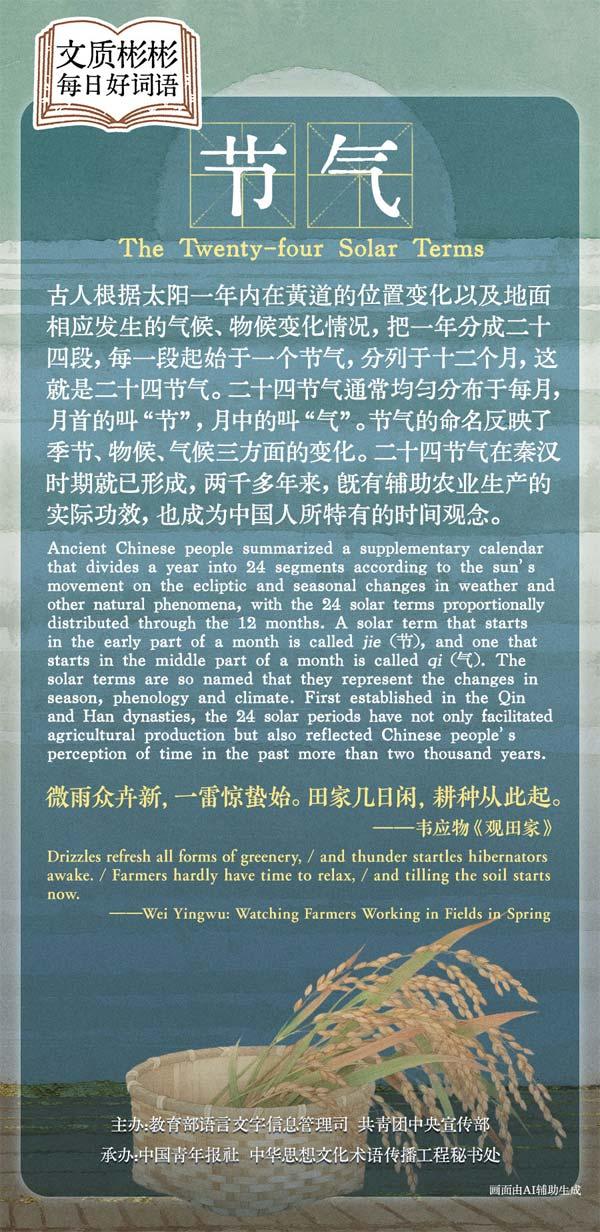
节气
古人根据太阳一年内在黄道的位置变化及地面相应发生的气候、物候变化情况,把一年分成24段,每一段起始于一个节气,分列于12个月,这就是二十四节气。二十四节气通常均匀分布于每月,月首的叫“节”,月中的叫“气”。节气的命名反映了季节、物候、气候三方面的变化。二十四节气在秦汉时期就已形成,2000多年来,既有辅助农业生产的实际功效,也成为中国人所特有的时间观念。
The Twenty-four Solar Terms
Ancient Chinese people summarized a supplementary calendar that divides a year into 24 segments according to the sun's movement on the ecliptic and seasonal changes in weather and other natural phenomena, with the 24 solar terms proportionally distributed through the 12 months. A solar term that starts in the early part of a month is called jie, and one that starts in the middle part of a month is called qi. The solar terms are so named that they represent the changes in season, phenology and climate. First established in the Qin and Han dynasties, the 24 solar periods have not only facilitated agricultural production but also reflected Chinese people's perception of time in the past more than two thousand years.
引例 微雨众卉新,一雷惊蛰始。田家几日闲,耕种从此起。(韦应物《观田家》)(绵绵细雨伴随百花清新,一声惊雷带来万物复苏。种田的人家哪有几日空闲,自此开始一年的耕种忙碌。)
Drizzles refresh all forms of greenery, / and thunder startles hibernators awake. / Farmers hardly have time to relax, / and tilling the soil starts now. (Wei Yingwu: Watching Farmers Working in Fields in Spring)

来源:中国青年报
2025年11月07日 02版
 放大
放大 缩小
缩小 全文复制
全文复制 上一篇
上一篇