 上一版
上一版




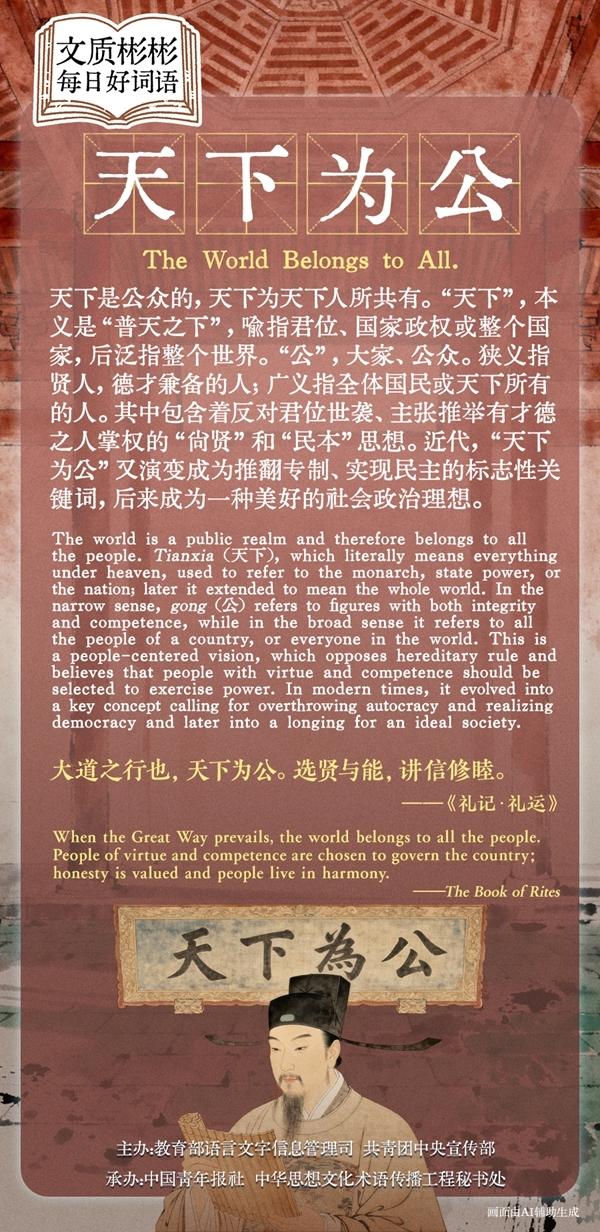
天下为公
天下是公众的,天下为天下人所共有。“天下”,本义是“普天之下”,喻指君位、国家政权或国家,后泛指整个世界。“公”,即大家、公众,狭义指贤人、德才兼备的人,广义指全体国民或天下所有的人。其中包含反对君位世袭、主张推举有才德之人掌权的“尚贤”和“民本”思想。近代,“天下为公”又演变成为推翻专制、实现民主的标志性关键词,后来成为一种美好的社会政治理想。
The World Belongs to All
The world is a public realm and therefore belongs to all the people. Tianxia, which literally means everything under heaven, used to refer to the monarch, state power, or the nation; later it extended to mean the whole world. In the narrow sense, gong refers to figures with both integrity and competence, while in the broad sense it refers to all the people of a country, or everyone in the world. This is a people-centered vision, which opposes hereditary rule and believes that people with virtue and competence should be selected to exercise power. In modern times, it evolved into a key concept calling for overthrowing autocracy and realizing democracy and later into a longing for an ideal society.
引例
大道之行也,天下为公。选贤与能,讲信修睦。(《礼记·礼运》)(大道施行的时代,天下为天下人共有,品德高尚、才能突出的人被选拔出来管理社会,人与人之间讲求诚实与和睦。)
When the Great Way prevails, the world belongs to all the people. People of virtue and competence are chosen to govern the country; honesty is valued and people live in harmony. (The Book of Rites)
来源:中国青年报
2026年01月27日 03版
 放大
放大 缩小
缩小 全文复制
全文复制 上一篇
上一篇