 上一版
上一版





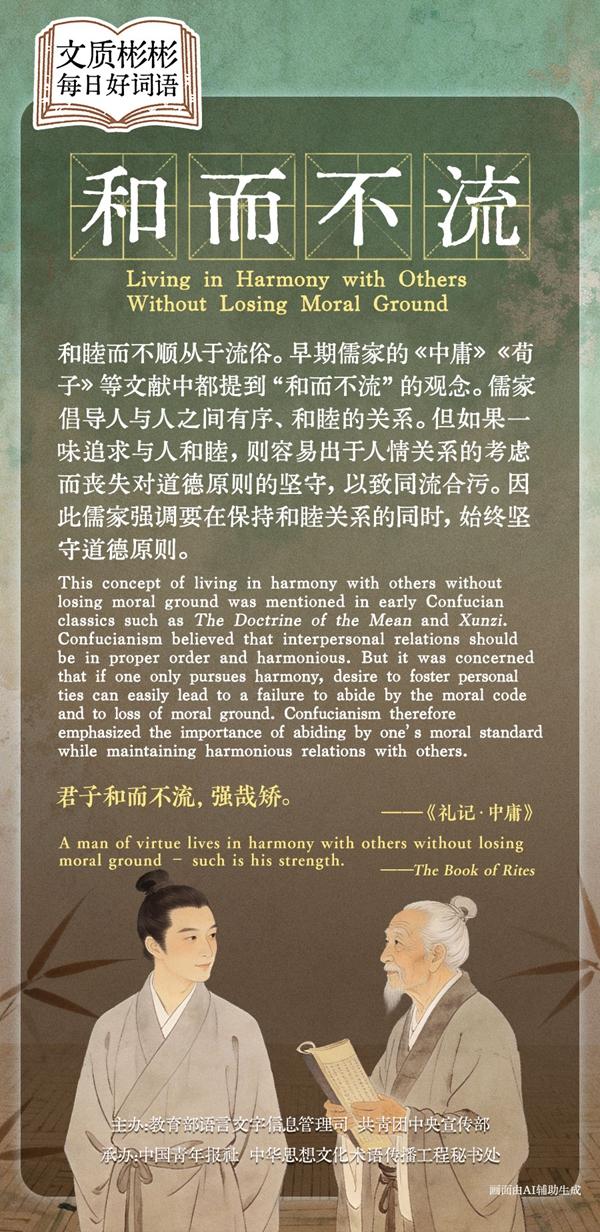
和而不流
和睦而不顺从于流俗。早期儒家的《中庸》《荀子》等文献中都提到“和而不流”的观念。儒家倡导人与人之间有序、和睦的关系。但如果一味追求与人和睦,则容易出于人情关系的考虑而丧失对道德原则的坚守,以致同流合污。因此儒家强调要在保持和睦关系的同时,始终坚守道德原则。
Living in Harmony with Others Without Losing Moral Ground
This concept of living in harmony with others without losing moral ground was mentioned in early Confucian classics such as The Doctrine of the Mean and Xunzi. Confucianism believed that interpersonal relations should be in proper order and harmonious. But it was concerned that if one only pursues harmony, desire to foster personal ties can easily lead to a failure to abide by the moral code and to loss of moral ground. Confucianism therefore emphasized the importance of abiding by one's moral standard while maintaining harmonious relations with others.
引例 君子和而不流,强哉矫。(《礼记·中庸》)(君子能与人和睦相处而不顺从于流俗,是刚强的表现。)
A man of virtue lives in harmony with others without losing moral ground – such is his strength. (The Book of Rites)

来源:中国青年报
2026年02月06日 02版
 放大
放大 缩小
缩小 全文复制
全文复制 上一篇
上一篇