





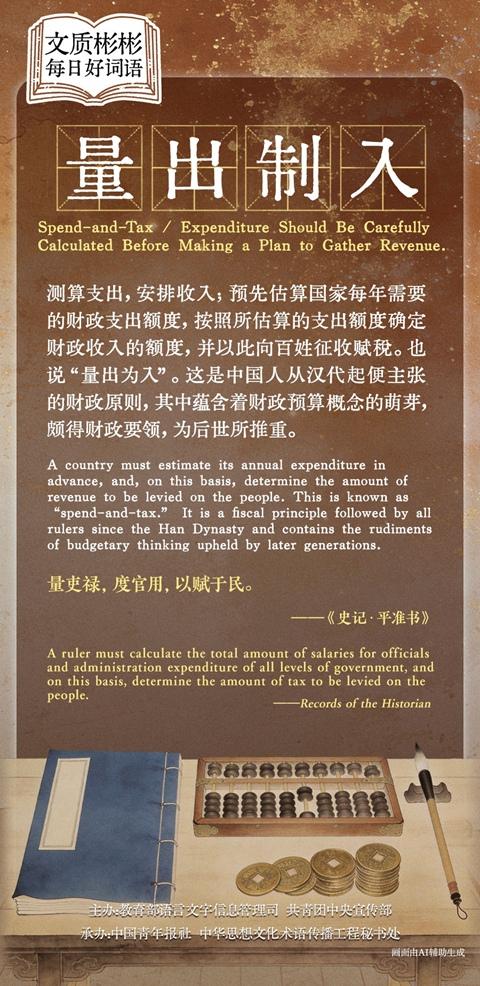
量出制入
测算支出,安排收入;预先估算国家每年需要的财政支出额度,按照估算的支出额度确定财政收入的额度,并以此向百姓征收赋税。也说“量出为入”。这是中国人从汉代起便主张的财政原则,其中蕴含着财政预算概念的萌芽,颇得财政要领,为后世所推崇。
Spend-and-Tax / Expenditure Should Be Carefully Calculated Before Making a Plan to Gather Revenue
A country must estimate its annual expenditure in advance, and, on this basis, determine the amount of revenue to be levied on the people. This is known as "spend-and-tax." It is a fiscal principle followed by all rulers since the Han Dynasty and contains the rudiments of budgetary thinking upheld by later generations.
引例1 量吏禄,度官用,以赋于民。(《史记·平准书》)(测算官吏所需的俸禄和各级政府的用度,以此作为向百姓征收赋税额度的依据。)
A ruler must calculate the total amount of salaries for officials and administration expenditure of all levels of government, and on this basis, determine the amount of tax to be levied on the people. (Records of the Historian)
引例2 凡百役之费,一钱之敛,先度其数而赋于人,量出以制入。(《旧唐书·杨炎传》)(所有征发劳役的费用,和收取的每一文的税收,都要预先算出征收的赋税总额,按这个额度向民众征收。)
The government may collect a tax of one tenth of a liang of silver for the expropriated labor of a hundred people. The total amount of tax to be collected should first be calculated, and on this basis, taxes levied on the people. This is called spend-and-tax. (The Old Tang History)

来源:中国青年报
2026年02月10日 01版
 放大
放大 缩小
缩小 全文复制
全文复制 上一篇
上一篇