 上一版
上一版





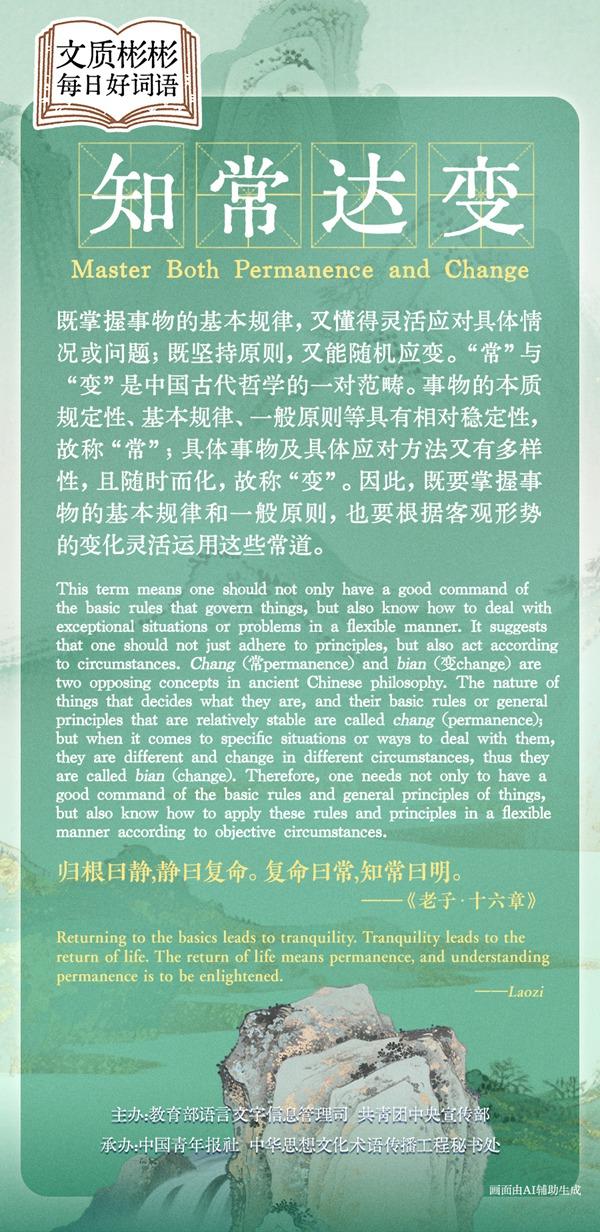
知常达变
既掌握事物的基本规律,又懂得灵活应对具体情况或问题;既坚持原则,又随机应变。“常”与“变”是中国古代哲学的一对范畴。事物的本质规定性、基本规律、一般原则等具有相对稳定性,故称“常”;具体事物及应对方法又有多样性,且随时而化,故称“变”。因此,既要掌握事物的基本规律和一般原则,也要根据客观形势的变化灵活运用这些常道。
Master Both Permanence and Change
This term means one should not only have a good command of the basic rules that govern things, but also know how to deal with exceptional situations or problems in a flexible manner. Chang and bian are two opposing concepts in ancient Chinese philosophy. The nature of things that decides what they are, and their basic rules or general principles that are relatively stable are called chang; but when it comes to specific situations or ways to deal with them, they are different and change in different circumstances, thus they are called bian. Therefore, one needs not only to have a good command of the basic rules and general principles of things, but also know how to apply these rules and principles in a flexible manner according to objective circumstances.
引例 归根曰静,静曰复命。复命曰常,知常曰明。(《老子·十六章》)(返回事物的本原即为“静”,“静”就是回归事物的本来状态。回归事物的本来状态就是“常”,认识了“常”即为开悟。)
Returning to the basics leads to tranquility. Tranquility leads to the return of life. The return of life means permanence, and understanding permanence is to be enlightened. (Laozi)
来源:中国青年报
2026年03月26日 02版
 放大
放大 缩小
缩小 全文复制
全文复制 上一篇
上一篇