





精理为文,秀气成采
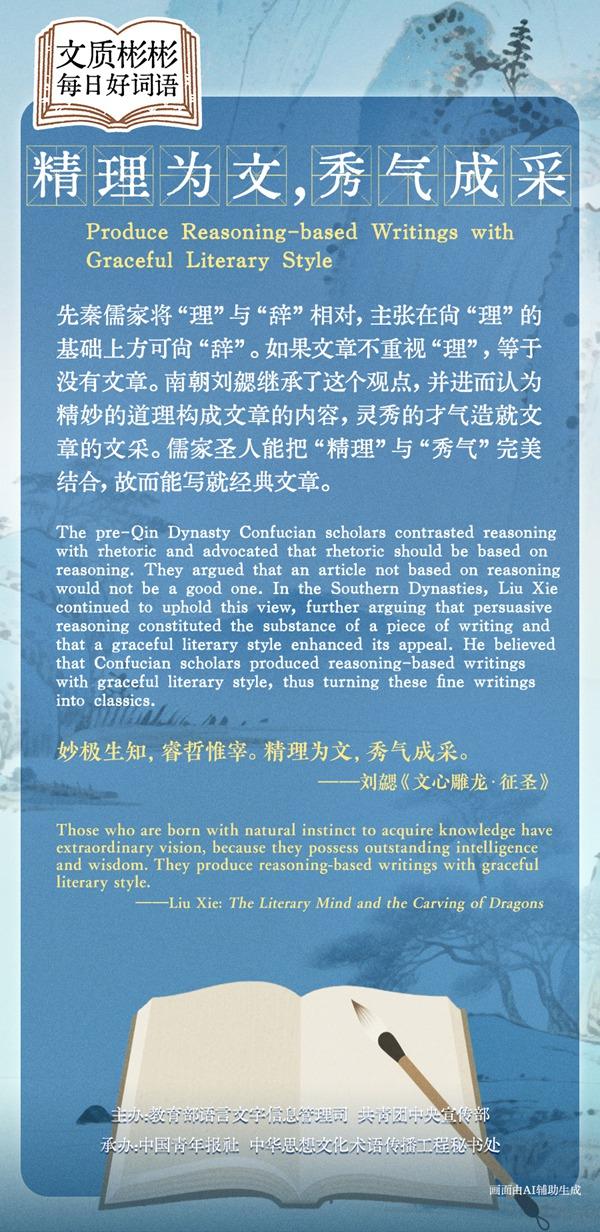
先秦儒家将“理”与“辞”相对,主张在尚“理”的基础上方可尚“辞”。如果文章不重视“理”,便不是好文章。南朝刘勰继承了这个观点,并进一步认为精妙的道理构成文章的内容,灵秀的才气造就文章的文采。儒家圣人能把“精理”与“秀气”完美结合,故而能写就经典文章。
Produce Reasoning-based Writings with Graceful Literary Style
The pre-Qin Dynasty Confucian scholars contrasted reasoning with rhetoric and advocated that rhetoric should be based on reasoning. They argued that an article not based on reasoning would not be a good one. In the Southern Dynasties, Liu Xie continued to uphold this view, further arguing that persuasive reasoning constituted the substance of a piece of writing and that a graceful literary style enhanced its appeal. He believed that Confucian scholars produced reasoning-based writings with graceful literary style, thus turning these fine writings into classics.
引例 妙极生知,睿哲惟宰。精理为文,秀气成采。(刘勰《文心雕龙·征圣》)(精妙到极致的是生而知之的人,因为他们拥有突出的聪明才智,从而可以主宰文章之道。他们以精妙的道理写成文章,以灵秀的才气造就文采。)
Those who are born with natural instinct to acquire knowledge have extraordinary vision, because they possess outstanding intelligence and wisdom. They produce reasoning -based writings with graceful literary style. (Liu Xie: The Literary Mind and the Carving of Dragons)
来源:中国青年报
2026年03月28日 01版
 放大
放大 缩小
缩小 全文复制
全文复制 上一篇
上一篇