





兴利除害
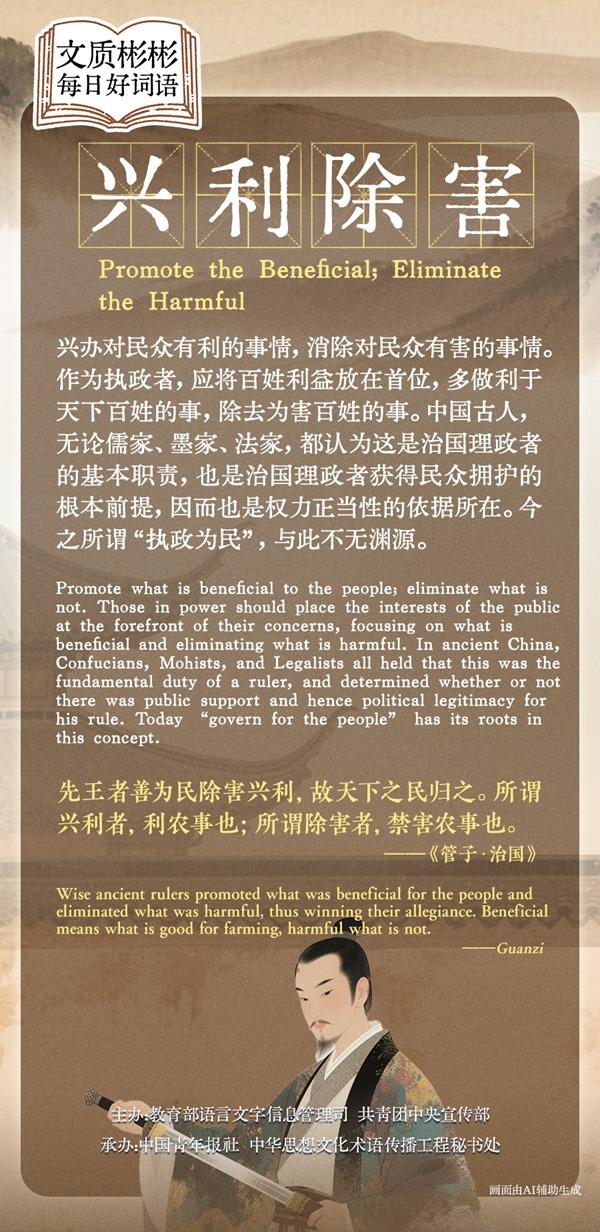
兴办对民众有利的事情,消除对民众有害的事情。作为执政者,应将百姓利益放在首位,多做利于天下百姓的事,除去为害百姓的事。中国古人,无论儒家、墨家、法家,都认为这是治国理政者的基本职责,也是治国理政者获得民众拥护的根本前提,因而也是权力正当性的依据所在。今之所谓“执政为民”,与此不无渊源。
Promote the Beneficial; Eliminate the Harmful
Promote what is beneficial to the people; eliminate what is not. Those in power should place the interests of the public at the forefront of their concerns, focusing on what is beneficial and eliminating what is harmful. In ancient China, Confucians, Mohists, and Legalists all held that this was the fundamental duty of a ruler, and determined whether or not there was public support and hence political legitimacy for his rule. Today "govern for the people" has its roots in this concept.
引例 先王者善为民除害兴利,故天下之民归之。所谓兴利者,利农事也;所谓除害者,禁害农事也。(《管子·治国》)(远古的贤明君王善于为人民除害兴利,所以天下人民都归附他。所谓兴利,就是有利于农业生产;所谓除害,就是禁止有害于农业生产的事情。)
Wise ancient rulers promoted what was beneficial for the people and eliminated what was harmful, thus winning their allegiance. Beneficial means what is good for farming, while harmful means what is not. (Guanzi)
来源:中国青年报
2026年03月29日 01版
 放大
放大 缩小
缩小 全文复制
全文复制 上一篇
上一篇