






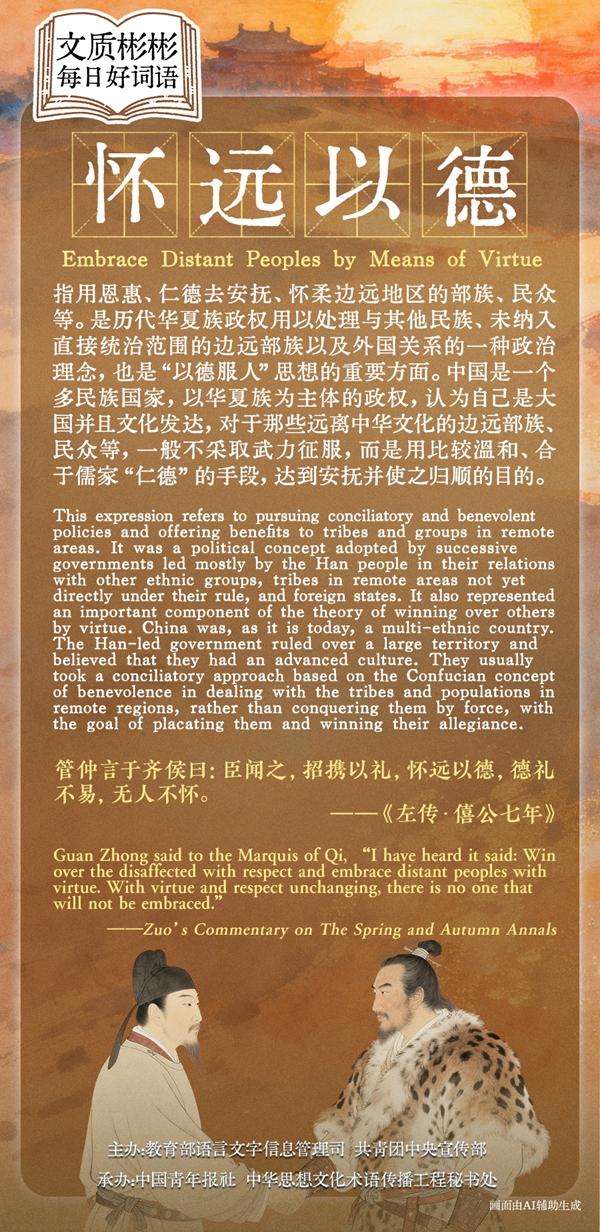
怀远以德
指用恩惠、仁德去安抚、怀柔边远地区的部族、民众等。是历代华夏族政权用以处理与其他民族、未纳入直接统治范围的边远部族以及外国关系的一种政治理念,也是“以德服人”思想的重要方面。中国是一个多民族国家,以华夏族为主体的政权,认为自己是大国并且文化发达,对于那些远离中华文化的边远部族、民众等,一般不采取武力征服,而是用比较温和、合于儒家“仁德”的手段,达到安抚并使之归顺的目的。
Embrace Distant Peoples by Means of Virtue
This expression refers to pursuing conciliatory and benevolent policies and offering benefits to tribes and groups in remote areas. It was a political concept adopted by successive governments led mostly by the Han people in their relations with other ethnic groups, tribes in remote areas not yet directly under their rule, and foreign states. It also represented an important component of the theory of winning over others by virtue. China was, as it is today, a multi-ethnic country. The Han-led government ruled over a large territory and believed that they had an advanced culture. They usually took a conciliatory approach based on the Confucian concept of benevolence in dealing with the tribes and populations in remote regions, rather than conquering them by force, with the goal of placating them and winning their allegiance.
引 例
管仲言于齐侯曰:臣闻之,招携以礼,怀远以德,德礼不易,无人不怀。(《左传·僖公七年》)(管仲对齐侯道:臣听说,招抚尚未归顺的诸侯,用礼;安抚边远地区的部族、民众,用德。不违背德和礼,没有人会不归附。)
Guan Zhong said to the Marquis of Qi, "I have heard it said: Win over the disaffected with respect and embrace distant peoples with virtue. With virtue and respect unchanging, there is no one that will not be embraced." (Zuo's Commentary on The Spring and Autumn Annals)

来源:中国青年报
2026年04月11日 01版
 放大
放大 缩小
缩小 全文复制
全文复制 上一篇
上一篇