





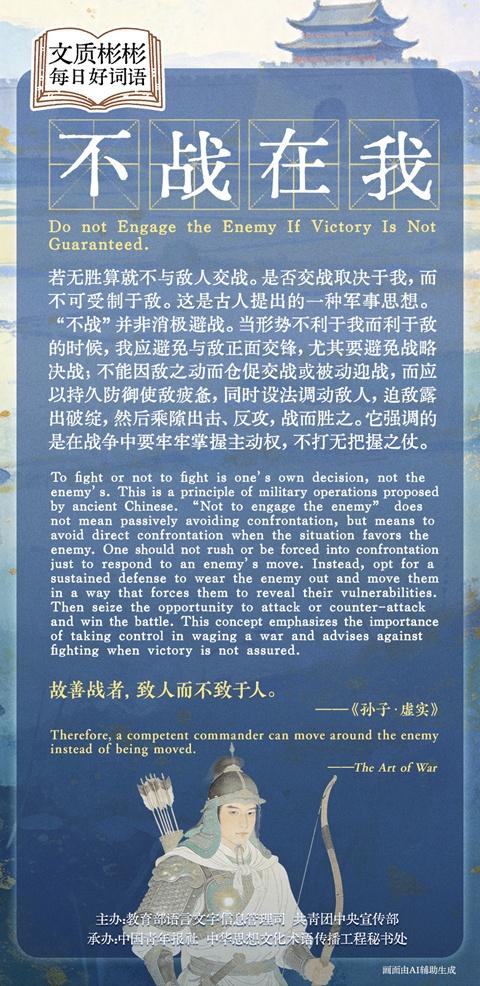
不战在我
若无胜算就不与敌人交战。是否交战取决于我,而不可受制于敌。这是古人提出的一种军事思想。“不战”并非消极避战。当形势不利于我而利于敌的时候,我应避免与敌正面交锋,尤其要避免战略决战;不能因敌之动而仓促交战或被动迎战,而应以持久防御使敌疲惫,同时设法调动敌人,迫敌露出破绽,然后乘隙出击、反攻,战而胜之。它强调的是在战争中要牢牢掌握主动权,不打无把握之仗。
Do not Engage the Enemy If Victory Is Not Guaranteed
To fight or not to fight is one's own decision, not the enemy's. This is a principle of military operations proposed by ancient Chinese. "Not to engage the enemy" does not mean passively avoiding confrontation, but means to avoid direct confrontation when the situation favors the enemy. One should not rush or be forced into confrontation just to respond to an enemy's move. Instead, opt for a sustained defense to wear the enemy out and move them in a way that forces them to reveal their vulnerabilities. Then seize the opportunity to attack or counter-attack and win the battle. This concept emphasizes the importance of taking control in waging a war and advises against fighting when victory is not assured.
引例 故善战者,致人而不致于人。(《孙子·虚实》)(所以善于指挥作战的人,能调动敌人而不为敌人所调动。)
Therefore, a competent commander can move around the enemy instead of being moved. (The Art of War)

来源:中国青年报
2026年04月18日 01版
 放大
放大 缩小
缩小 全文复制
全文复制 上一篇
上一篇