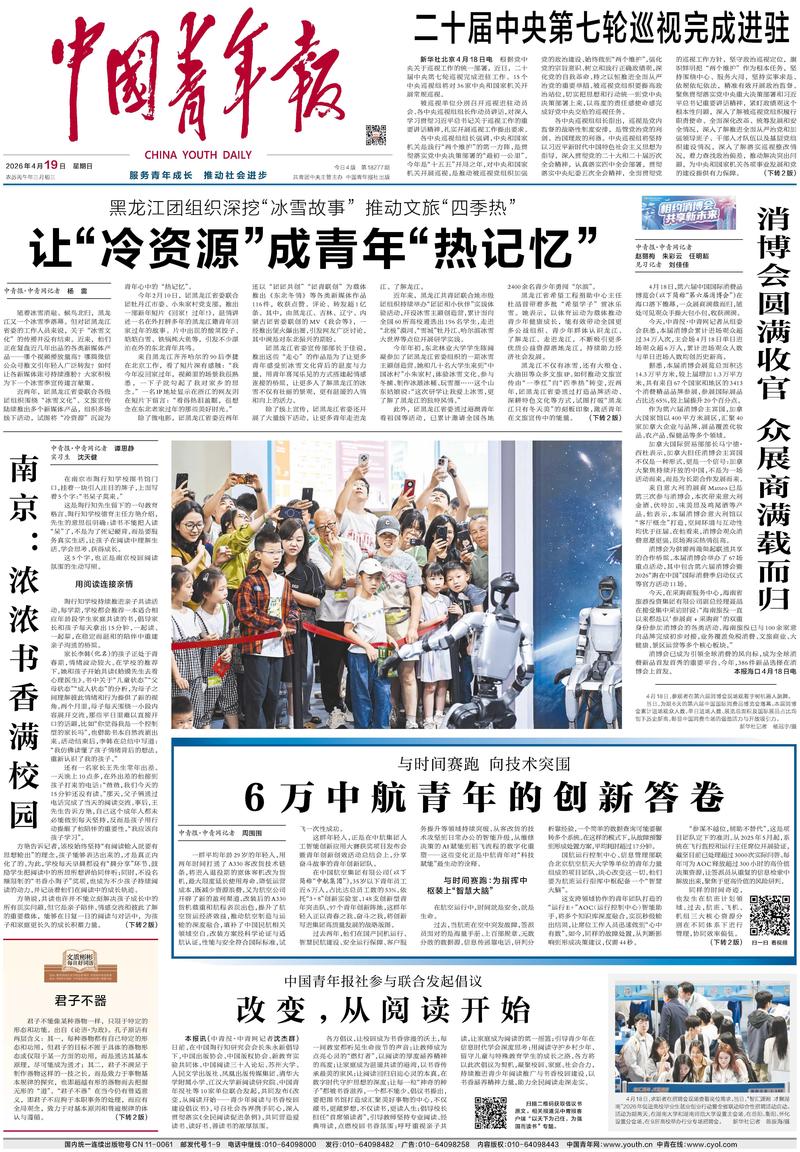






君子不器
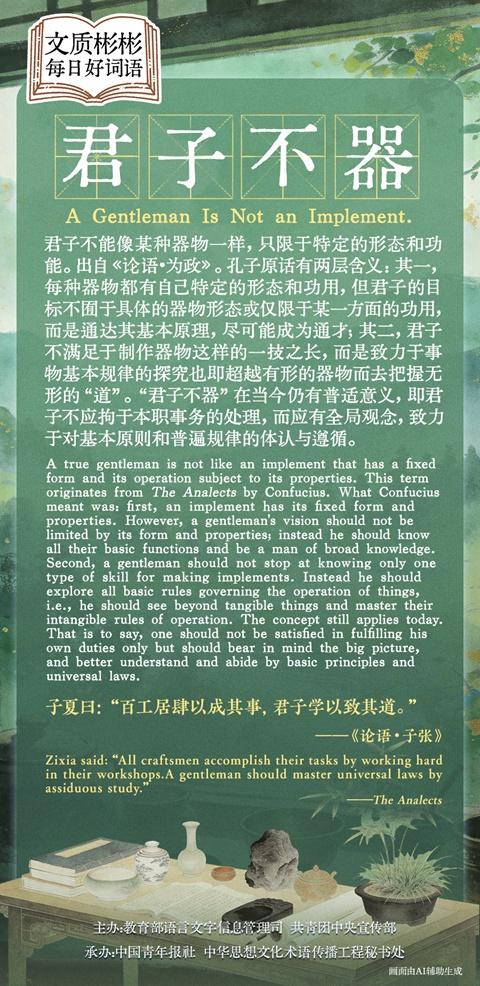
君子不能像某种器物一样,只限于特定的形态和功能。出自《论语·为政》。孔子原话有两层含义:其一,每种器物都有自己特定的形态和功用,但君子的目标不囿于具体的器物形态或仅限于某一方面的功用,而是通达其基本原理,尽可能成为通才;其二,君子不满足于制作器物这样的一技之长,而是致力于事物基本规律的探究,也即超越有形的器物而去把握无形的“道”。“君子不器”在当今仍有普适意义,即君子不应拘于本职事务的处理,而应有全局观念,致力于对基本原则和普遍规律的体认与遵循。
A Gentleman Is Not an Implement
A true gentleman is not like an implement that has a fixed form with its operation subject to its properties. This term originates from The Analects by Confucius. What Confucius meant was: first, an implement has its fixed form and properties. However, a gentleman's vision should not be limited by its form and properties; instead he should know all its basic functions and be a man of broad knowledge. Second, a gentleman should not stop at knowing only one type of skill for making implements. Instead he should explore all basic rules governing the operation of things, i.e., he should see beyond tangible things and master their intangible rules of operation. The concept still applies today. That is to say, one should not be satisfied with fulfilling his own duties only but should bear in mind the big picture, and better understand and abide by basic principles and universal laws.
引例 子夏曰:“百工居肆以成其事,君子学以致其道。”(《论语·子张》)(子夏说:“各行各业的工匠需要专注在作坊里完成自己的工作,君子则需要通过持续的学习来完成道德修炼和真理感悟。”)
Zixia said, "All craftsmen accomplish their tasks by working hard in their workshops. A gentleman should master universal laws by assiduous study." (The Analects)
来源:中国青年报
2026年04月19日 01版
 放大
放大 缩小
缩小 全文复制
全文复制 上一篇
上一篇