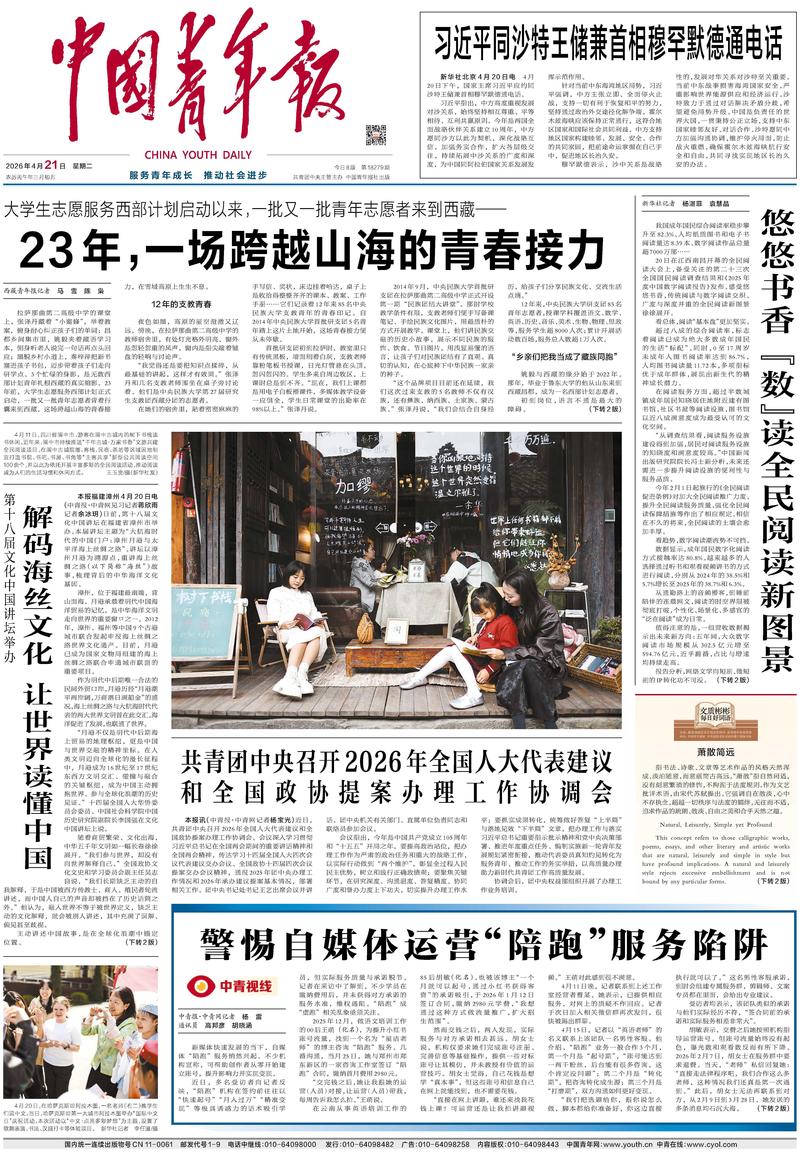






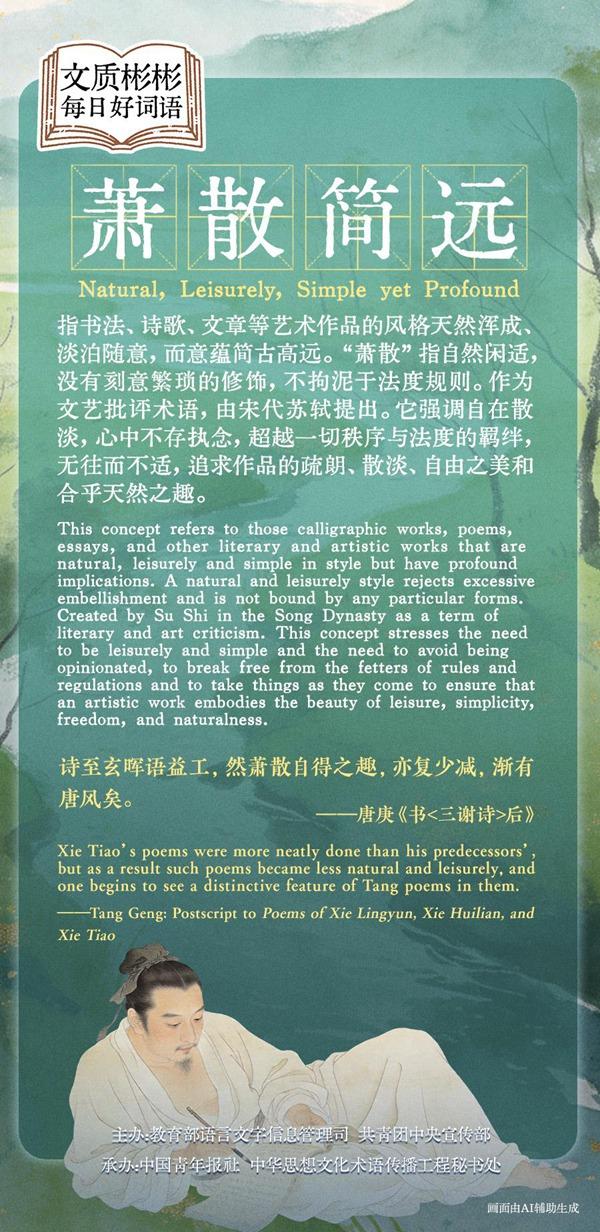
萧散简远
指书法、诗歌、文章等艺术作品的风格天然浑成、淡泊随意,而意蕴简古高远。“萧散”指自然闲适,没有刻意繁琐的修饰,不拘泥于法度规则。作为文艺批评术语,由宋代苏轼提出。它强调自在散淡,心中不存执念,超越一切秩序与法度的羁绊,无往而不适,追求作品的疏朗、散淡、自由之美和合乎天然之趣。
Natural, Leisurely, Simple yet Profound
This concept refers to those calligraphic works, poems, essays, and other literary and artistic works that are natural, leisurely and simple in style but have profound implications. A natural and leisurely style rejects excessive embellishment and is not bound by any particular forms. Created by Su Shi in the Song Dynasty as a term of literary and art criticism. This concept stresses the need to be leisurely and simple and the need to avoid being opinionated, to break free from the fetters of rules and regulations and to take things as they come to ensure that an artistic work embodies the beauty of leisure, simplicity, freedom, and naturalness.
引例 诗至玄晖语益工,然萧散自得之趣,亦复少减,渐有唐风矣。(唐庚《书〈三谢诗〉后》)(诗歌发展到谢朓,语句更加工整,但是自然闲适、悠然自得的趣味也随之减少了,逐渐有唐人作品的特点了。)
Xie Tiao's poems were more neatly done than his predecessors', but as a result, such poems became less natural and leisurely, and one begins to see a distinctive feature of Tang poems in them. (Tang Geng: Postscript to Poems of Xie Lingyun, Xie Huilian, and Xie Tiao)
来源:中国青年报
2026年04月21日 01版
 放大
放大 缩小
缩小 全文复制
全文复制 上一篇
上一篇