





推己及人
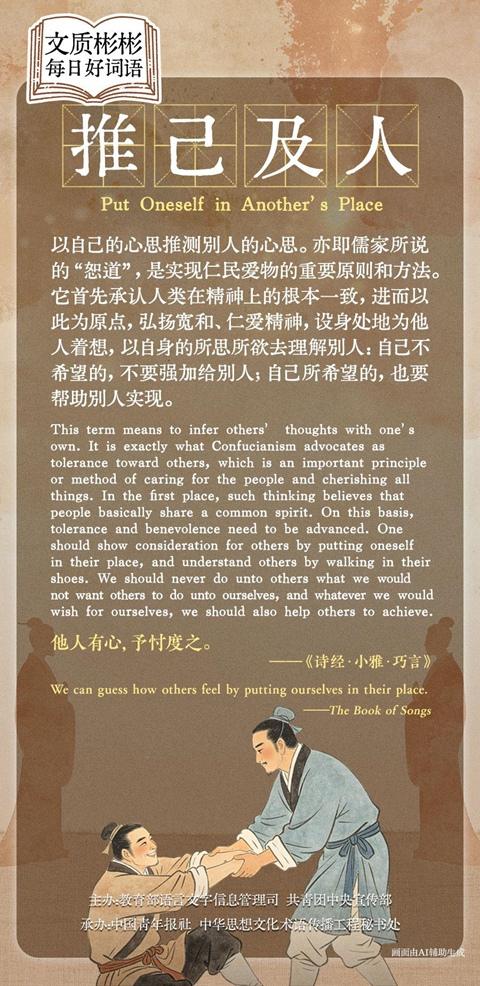
以自己的心思推测别人的心思。亦即儒家所说的“恕道”,是实现仁民爱物的重要原则和方法。它首先承认人类在精神上的根本一致,进而以此为原点,弘扬宽和、仁爱精神,设身处地为他人着想,以自身的所思所欲去理解别人:自己不希望的,不要强加给别人;自己所希望的,也要帮助别人实现。
Put Oneself in Another's Place
This term means to infer others' thoughts from one's own. It is exactly what Confucianism advocates as tolerance toward others, which is an important principle or method of caring for people and cherishing all things. In the first place, such thinking believes that people basically share a common spirit. On this basis, tolerance and benevolence need to be advanced. One should show consideration for others by putting oneself in their place, and understand others by walking in their shoes. We should never do unto others what we would not want others to do unto ourselves, and whatever we would wish for ourselves, we should also help others to achieve.
引例 他人有心,予忖度之。(《诗经·小雅·巧言》)(别人有什么心思,要能揣测得到)
忠恕违道不远,施诸己而不愿,亦勿施于人。(《礼记·中庸》)(忠和恕离大道不远,如果不愿意施加在自己身上,那么也不要强加给别人。)
We can guess how others feel by putting ourselves in their place. (The Book of Songs)
Loyalty and forgiveness is very close to the principle of integrity, which means we should never impose upon others what we are not willing to accept ourselves. (The Book of Rites)
来源:中国青年报
2026年06月20日 01版
 放大
放大 缩小
缩小 全文复制
全文复制 上一篇
上一篇