 上一版
上一版





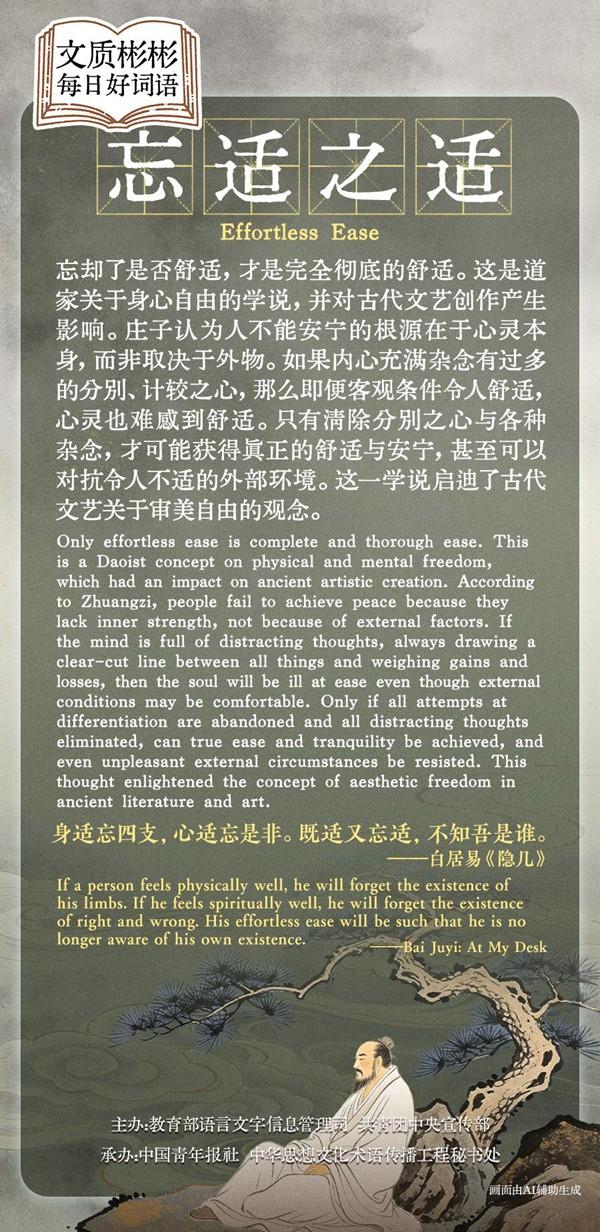
忘适之适
忘却了是否舒适,才是完全彻底的舒适。这是道家关于身心自由的学说,并对古代文艺创作产生影响。庄子认为人不能安宁的根源在于心灵本身,而非取决于外物。如果内心充满杂念,有过多的分别、计较之心,那么即便客观条件令人舒适,心灵也难感到舒适。只有清除分别之心与各种杂念,才可能获得真正的舒适与安宁,甚至可以对抗令人不适的外部环境。这一学说启迪了古代文艺关于审美自由的观念。
Effortless Ease
Only effortless ease is complete and thorough ease. This is a Daoist concept on physical and mental freedom, which had an impact on ancient artistic creation. According to Zhuangzi, people fail to achieve peace because they lack inner strength, not because of external factors. If the mind is full of distracting thoughts, always drawing a clear-cut line between all things and weighing gains and losses, then the soul will be ill at ease even though external conditions may be comfortable. Only if all attempts at differentiation are abandoned and all distracting thoughts eliminated, can true ease and tranquility be achieved, and even unpleasant external circumstances be resisted. This thought enlightened the concept of aesthetic freedom in ancient literature and art.
引例 身适忘四支,心适忘是非。既适又忘适,不知吾是谁。(白居易《隐几》)(身体舒适就忘记了四肢的存在,心灵舒适就忘记了是非的存在。既舒适又忘记舒适,乃至忘记了自己是谁。)
If a person feels physically well, he will forget the existence of his limbs. If he feels spiritually well, he will forget the existence of right and wrong. His effortless ease will be such that he is no longer aware of his own existence. (Bai Juyi: At My Desk)
来源:中国青年报
2026年07月06日 02版
 放大
放大 缩小
缩小 全文复制
全文复制 上一篇
上一篇