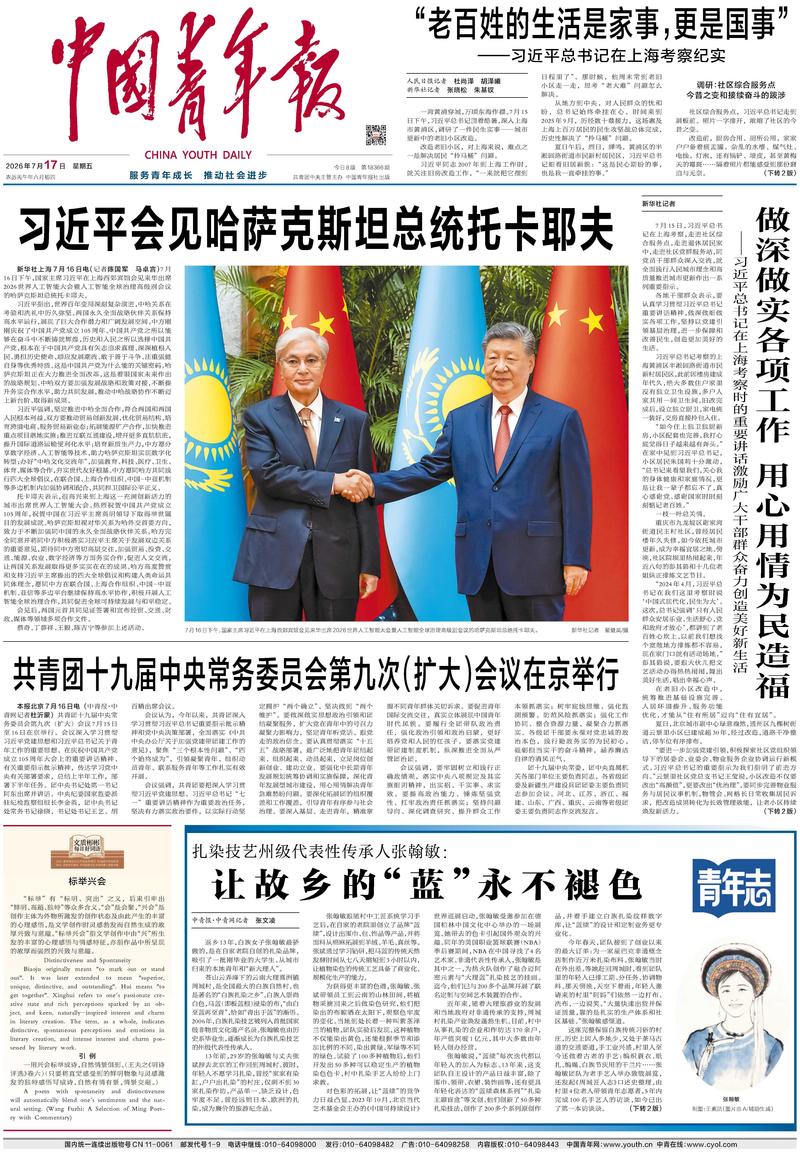




标举兴会
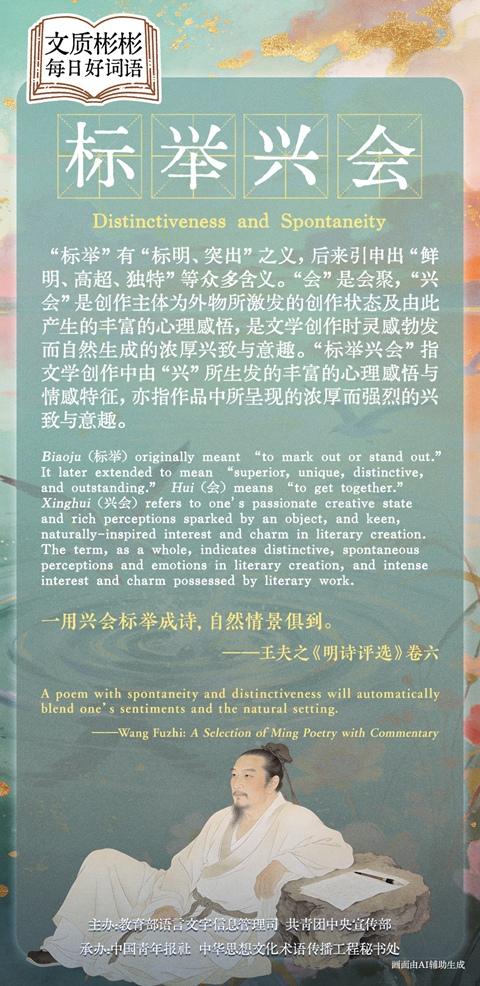
“标举”有“标明、突出”之义,后来引申出“鲜明、高超、独特”等众多含义。“会”是会聚,“兴会”是创作主体为外物所激发的创作状态及由此产生的丰富的心理感悟,是文学创作时灵感勃发而自然生成的浓厚兴致与意趣。“标举兴会”指文学创作中由“兴”所生发的丰富的心理感悟与情感特征,亦指作品中所呈现的浓厚而强烈的兴致与意趣。
Distinctiveness and Spontaneity
Biaoju originally meant "to mark out or stand out". It was later extended to mean "superior, unique, distinctive, and outstanding". Hui means "to get together". Xinghui refers to one's passionate creative state and rich perceptions sparked by an object, and keen, naturally-inspired interest and charm in literary creation. The term, as a whole, indicates distinctive, spontaneous perceptions and emotions in literary creation, and intense interest and charm possessed by literary work.
引例
一用兴会标举成诗,自然情景俱到。(王夫之《明诗评选》卷六)(只要将直觉感受到的鲜明物象与灵感激发的独特感悟写成诗,自然有情有景,情景交融。)
A poem with spontaneity and distinctiveness will automatically blend one's sentiments and the natural setting. (Wang Fuzhi: A Selection of Ming Poetry with Commentary)
来源:中国青年报
2026年07月17日 01版
 放大
放大 缩小
缩小 全文复制
全文复制 上一篇
上一篇