






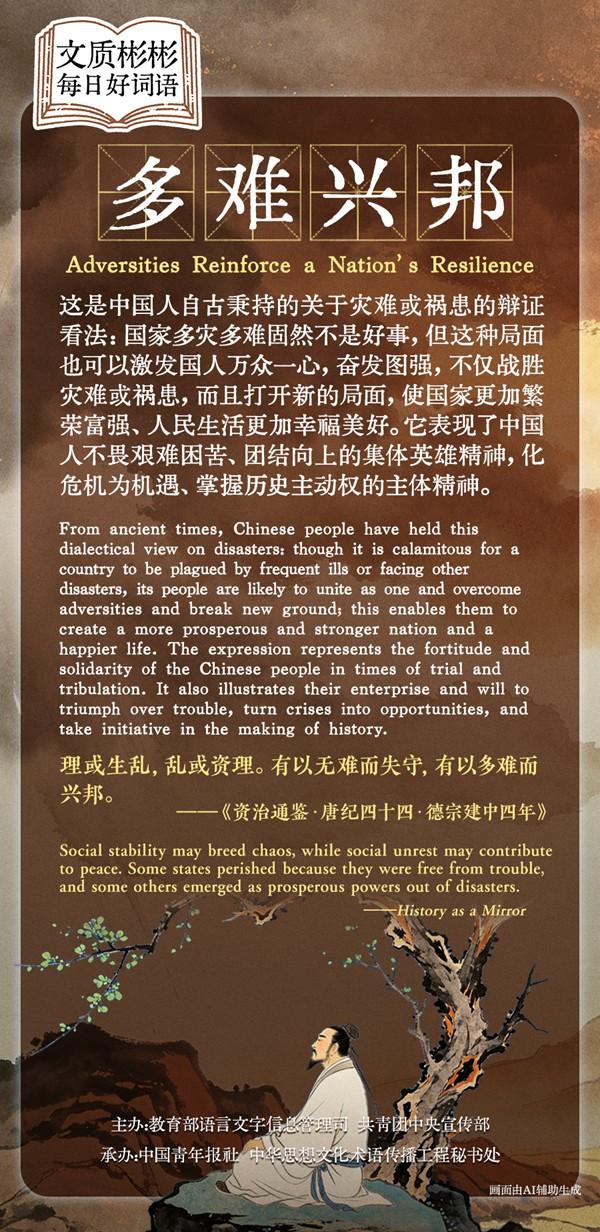
多难兴邦
这是中国人自古秉持的关于灾难或祸患的辩证看法:国家多灾多难固然不是好事,但这种局面也可以激发国人万众一心、奋发图强,不仅战胜灾难或祸患,而且打开新的局面,使国家更加繁荣富强、人民生活更加幸福美好。它表现了中国人不畏艰难困苦、团结向上的集体英雄精神,化危机为机遇、掌握历史主动权的主体精神。
Adversities Reinforce a Nation's Resilience
From ancient times, Chinese people have held this dialectical view on disasters: though it is calamitous for a country to be plagued by frequent ills or facing other disasters, its people are likely to unite as one and overcome adversities and break new ground; this enables them to create a more prosperous and stronger nation and a happier life. The expression represents the fortitude and solidarity of the Chinese people in times of trial and tribulation. It also illustrates their enterprise and will to triumph over trouble, turn crises into opportunities, and take initiative in the making of history.
引例 理或生乱,乱或资理。有以无难而失守,有以多难而兴邦。(《资治通鉴·唐纪四十四·德宗建中四年》)(国家安定或许滋生动乱,国家动乱或许有助于安定。有的国家因为没有祸难而失去稳定,有的国家因为多灾多难而转向兴盛。)
Social stability may breed chaos, while social unrest may contribute to peace. Some states perished because they were free from trouble, and some others emerged as prosperous powers out of disasters. (History as a Mirror)

来源:中国青年报
2026年07月28日 01版
 放大
放大 缩小
缩小 全文复制
全文复制 上一篇
上一篇