






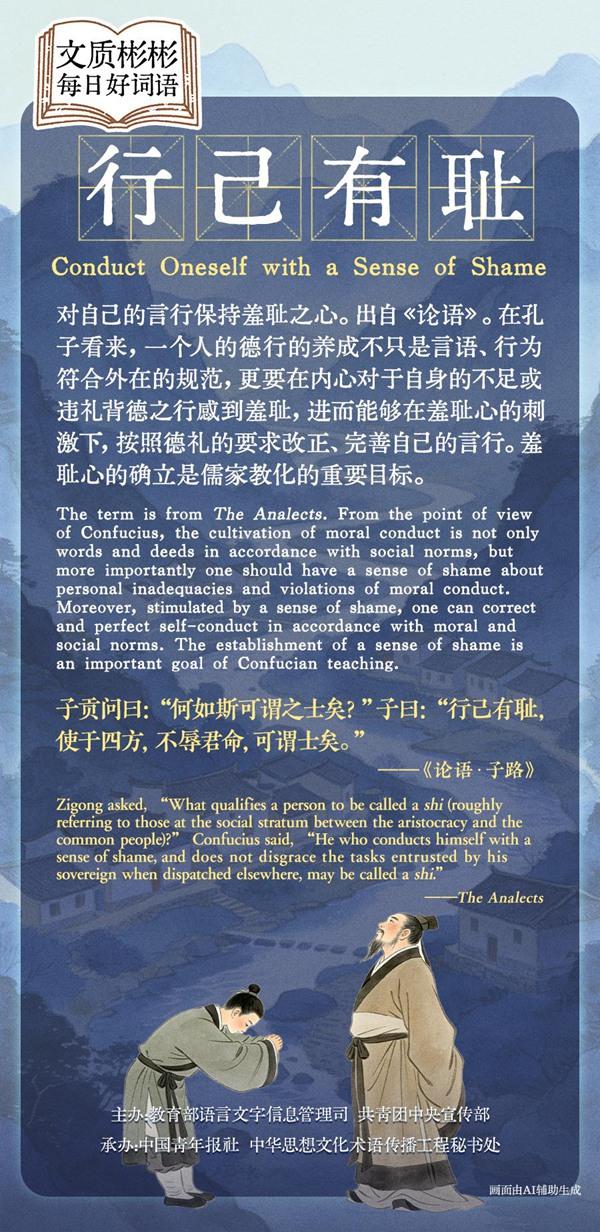
行己有耻
对自己的言行保持羞耻之心。出自《论语》。在孔子看来,一个人德行的养成不只是言语、行为符合外在的规范,更要在内心对于自身的不足或违礼背德之行感到羞耻,进而能够在羞耻心的刺激下,按照德礼的要求改正、完善自己的言行。羞耻心的确立是儒家教化的重要目标。
Conduct Oneself with a Sense of Shame
The term is from The Analects. From the point of view of Confucius, the cultivation of moral conduct is not only words and deeds in accordance with social norms, but more importantly one should have a sense of shame about personal inadequacies and violations of moral conduct. Moreover, stimulated by a sense of shame, one can correct and perfect self-conduct in accordance with moral and social norms. The establishment of a sense of shame is an important goal of Confucian teaching.
引例
子贡问曰:“何如斯可谓之士矣?”子曰:“行己有耻,使于四方,不辱君命,可谓士矣。”(《论语·子路》)(子贡请教:“如何做才可以称为士?”孔子说:“对自己的言行保持羞耻之心,出使四方诸侯,不辱没君主赋予的使命,就可以称为士了。”)
Zigong asked, "What qualifies a person to be called a shi (roughly referring to those at the social stratum between the aristocracy and the common people)?" Confucius said, "He who conducts himself with a sense of shame, and does not disgrace the tasks entrusted by his sovereign when dispatched elsewhere, may be called a shi." (The Analects)

来源:中国青年报
2026年08月02日 01版
 放大
放大 缩小
缩小 全文复制
全文复制 上一篇
上一篇