





保民而王
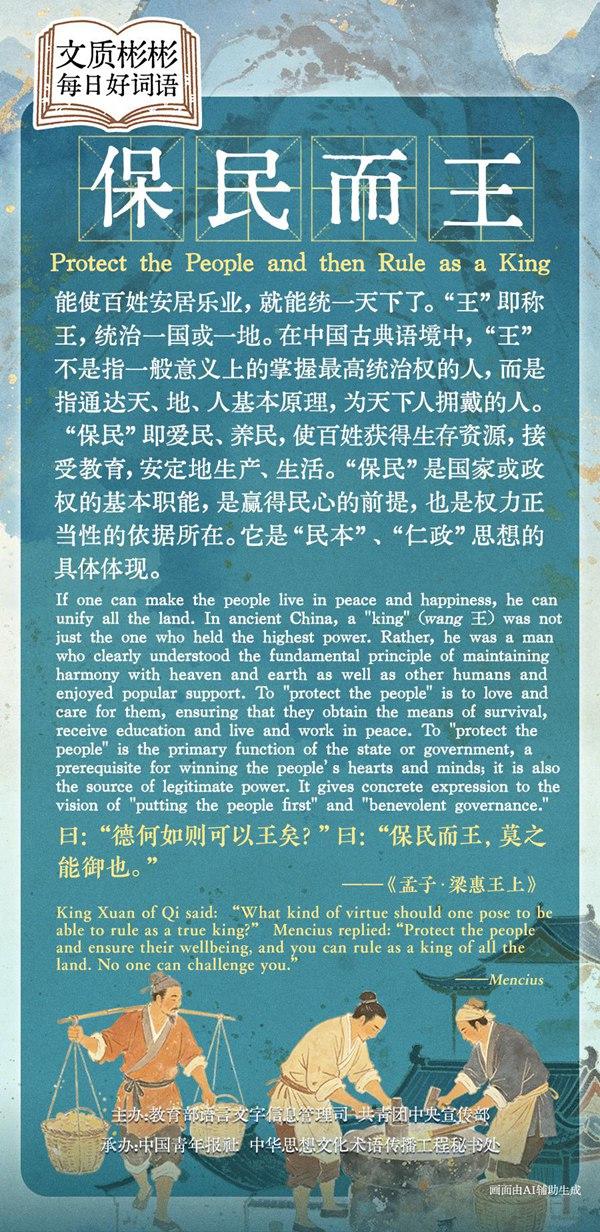
能使百姓安居乐业,就能统一天下了。“王”即称王,统治一国或一地。在中国古典语境中,王不是指一般意义上的掌握最高统治权的人,而是指通达天、地、人基本原理,为天下人拥戴的人。“保民”即爱民、养民,使百姓获得生存资源,接受教育,安定地生产、生活。“保民”是国家或政权的基本职能,是赢得民心的前提,也是权力正当性的依据所在。它是“民本”“仁政”思想的具体体现。
Protect the People and then Rule as a King
If one can make the people live in peace and happiness, he can unify all the land. In ancient China, a king was not just the one who held the highest power. Rather, a king was the one who clearly understood the fundamental principle of maintaining harmony with heaven and earth as well as other humans, and enjoyed popular support. To "protect the people" is to love and care for them, ensuring that they obtain the means of survival, receive education, and live and work in peace. To "protect the people" is the primary function of the state or government, a prerequisite for winning the people's hearts and minds; it is also the source of legitimate power. It gives concrete expression to the vision of "putting the people first" and "benevolent governance."
引例
曰:“德何如则可以王矣?”曰:“保民而王,莫之能御也。”(《孟子·梁惠王上》)(齐宣王问道:“德行怎样才可以统一天下呢?”孟子回答说:“能使百姓安居乐业,就能统一天下了,谁都抵挡不了。”)
王璟瑄 李晗来源:中国青年报
2026年08月05日 01版
 放大
放大 缩小
缩小 全文复制
全文复制 上一篇
上一篇