





隐秀
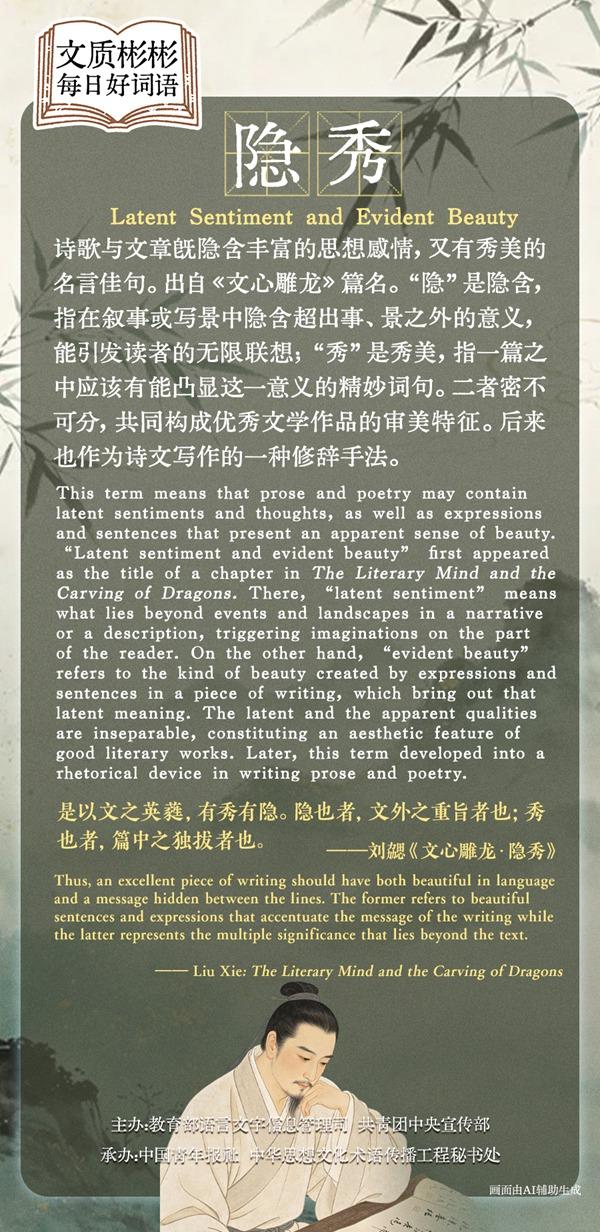
诗歌与文章既隐含丰富的思想感情,又有秀美的名言佳句。出自《文心雕龙》篇名。“隐”是隐含,指在叙事或写景中隐含超出事、景之外的意义,能引发读者的无限联想;“秀”是秀美,指篇章之中有能凸显这一意义的精妙词句。二者密不可分,共同构成优秀文学作品的审美特征。后来成为诗文写作的一种修辞手法。
Latent Sentiment and Evident Beauty
This term means that prose and poetry may contain latent sentiments and thoughts, as well as expressions and sentences that present an apparent sense of beauty. "Latent sentiment and evident beauty" first appeared as the title of a chapter in The Literary Mind and the Carving of Dragons. There, "latent sentiment" means what lies beyond events and landscapes in a narrative or a description, triggering imaginations on the part of the reader. On the other hand, "evident beauty" refers to the kind of beauty created by expressions and sentences in a piece of writing, which bring out that latent meaning. The latent and the apparent qualities are inseparable, constituting an aesthetic feature of good literary works. Later, this term developed into a rhetorical device in writing prose and poetry.
引例 是以文之英蕤,有秀有隐。隐也者,文外之重旨者也;秀也者,篇中之独拔者也。(刘勰《文心雕龙·隐秀》)(因此优秀的文章要兼具“秀”和“隐”。所谓“隐”,指文章在语言之外隐含多重意蕴;所谓“秀”,指有既彰显主旨又独到突出的秀美词句。)
Thus, an excellent piece of writing should have both beauty in language and a message hidden between the lines. "A message hidden between the lines" represents the multiple significance that lies beyond the text, while "beauty in language" refers to beautiful sentences and expressions that accentuate the message of the writing. (Liu Xie: The Literary Mind and the Carving of Dragons)
来源:中国青年报
2026年08月25日 01版
 放大
放大 缩小
缩小 全文复制
全文复制 上一篇
上一篇