






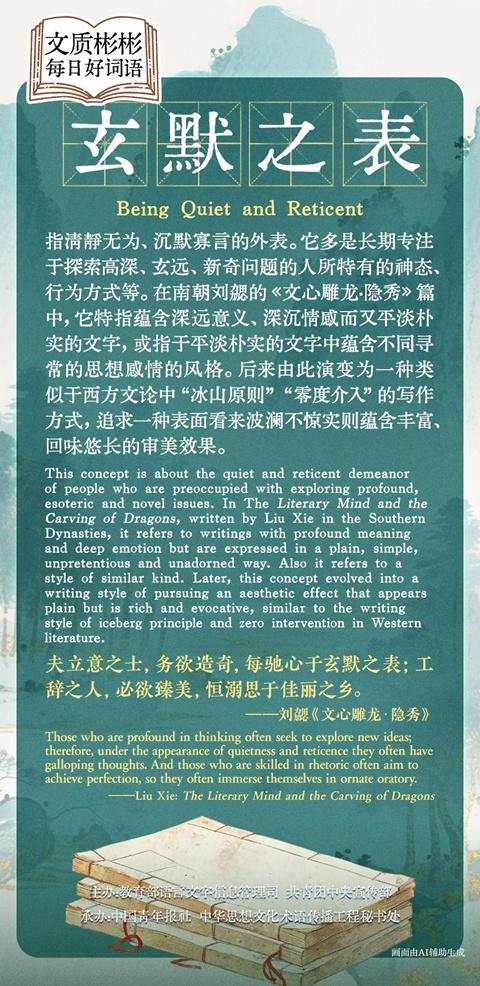
玄默之表
指清静无为、沉默寡言的外表。它多是长期专注于探索高深、玄远、新奇问题的人所特有的神态、行为方式等。在南朝刘勰的《文心雕龙·隐秀》篇中,它特指蕴含深远意义、深沉情感而又平淡朴实的文字,或指于平淡朴实的文字中蕴含不同寻常的思想感情的风格。后来由此演变为一种类似于西方文论中“冰山原则”“零度介入”的写作方式,追求一种表面看来波澜不惊实则蕴含丰富、回味悠长的审美效果。
Being Quiet and Reticent
This concept is about the quiet and reticent demeanor of people who are preoccupied with exploring profound, esoteric, and novel issues. In The Literary Mind and the Carving of Dragons, written by Liu Xie in the Southern Dynasties, it refers to writings with profound meaning and deep emotion but are expressed in a plain, simple, unpretentious, and unadorned way. Also it refers to a style of similar kind. Later, this concept evolved into a writing style of pursuing an aesthetic effect that appears plain but is rich and evocative, similar to the writing style of iceberg principle and zero intervention in Western literature.
引例
夫立意之士,务欲造奇,每驰心于玄默之表;工辞之人,必欲臻美,恒溺思于佳丽之乡。(刘勰《文心雕龙·隐秀》)(那立意深远的人,务求新奇的构思,常在沉静寡言的外表下掩藏着奔驰的思绪;工于言辞的人,一定想要达到完美的境界,经常沉浸在辞藻华丽处反复琢磨。)
Those who are profound in thinking often seek to explore new ideas; therefore, under the appearance of quietness and reticence they often have galloping thoughts. And those who are skilled in rhetoric often aim to achieve perfection, so they often immerse themselves in ornate oratory. (Liu Xie: The Literary Mind and the Carving of Dragons)
来源:中国青年报
2026年09月08日 01版
 放大
放大 缩小
缩小 全文复制
全文复制 上一篇
上一篇