
 上一版
上一版





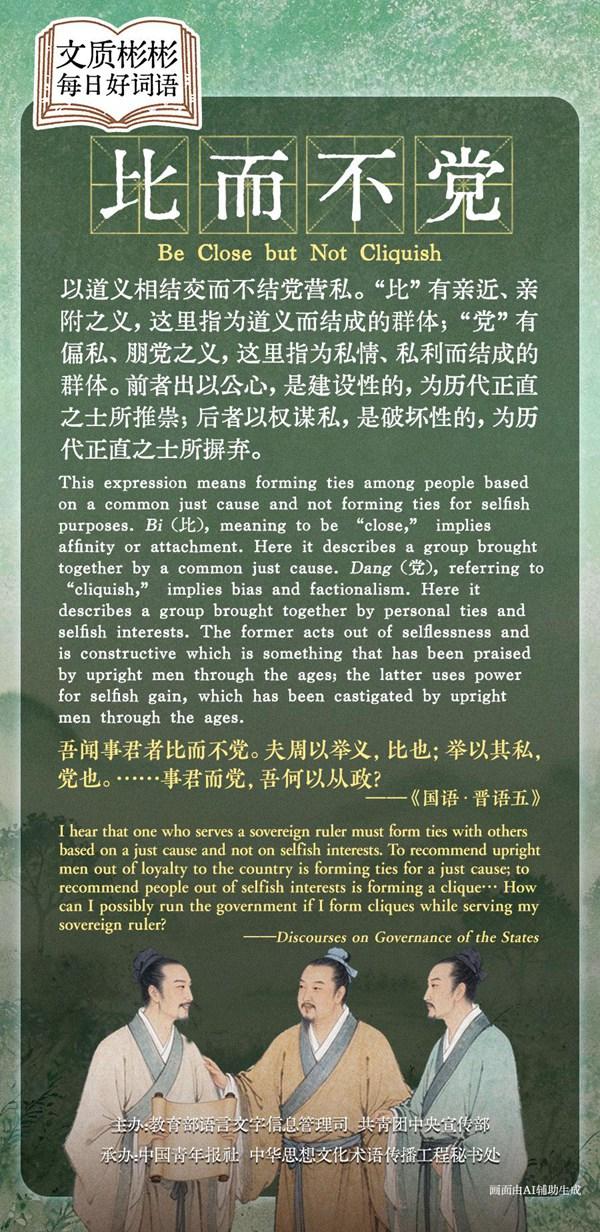
比而不党
以道义相结交而不结党营私。“比”有亲近、亲附之义,这里指为道义而结成的群体;“党”有偏私、朋党之义,这里指为私情、私利而结成的群体。前者出以公心,是建设性的,为历代正直之士所推崇;后者以权谋私,是破坏性的,为历代正直之士所摒弃。
Be Close but Not Cliquish
This expression means forming ties among people based on a common just cause and not forming ties for selfish purposes. Bi, meaning to be "close," implies affinity or attachment. Here it describes a group brought together by a common just cause. Dang, referring to "cliquish," implies bias and factionalism. Here it describes a group brought together by personal ties and selfish interests. The former acts out of selflessness and is constructive which is something that has been praised by upright men through the ages; the latter uses power for selfish gain, which has been castigated by upright men through the ages.
引例
吾闻事君者比而不党。夫周以举义,比也;举以其私,党也……事君而党,吾何以从政?(《国语·晋语五》)(我听说事奉国君的人应以道义相结交,而不结党营私。出于忠信而为国推举正直的人,这是以道义相结交;出于私利而举荐人才,这是结党营私……如果事奉国君却结党营私,我拿什么来执政呢?)
I hear that one who serves a sovereign ruler must form ties with others based on a just cause and not on selfish interests. To recommend upright men out of loyalty to the country is forming ties for a just cause; to recommend people out of selfish interests is forming a clique… How can I possibly run the government if I form cliques while serving my sovereign ruler? (Discourses on Governance of the States)

来源:中国青年报
2026年10月14日 02版
 放大
放大 缩小
缩小 全文复制
全文复制 上一篇
上一篇