





仁者无敌
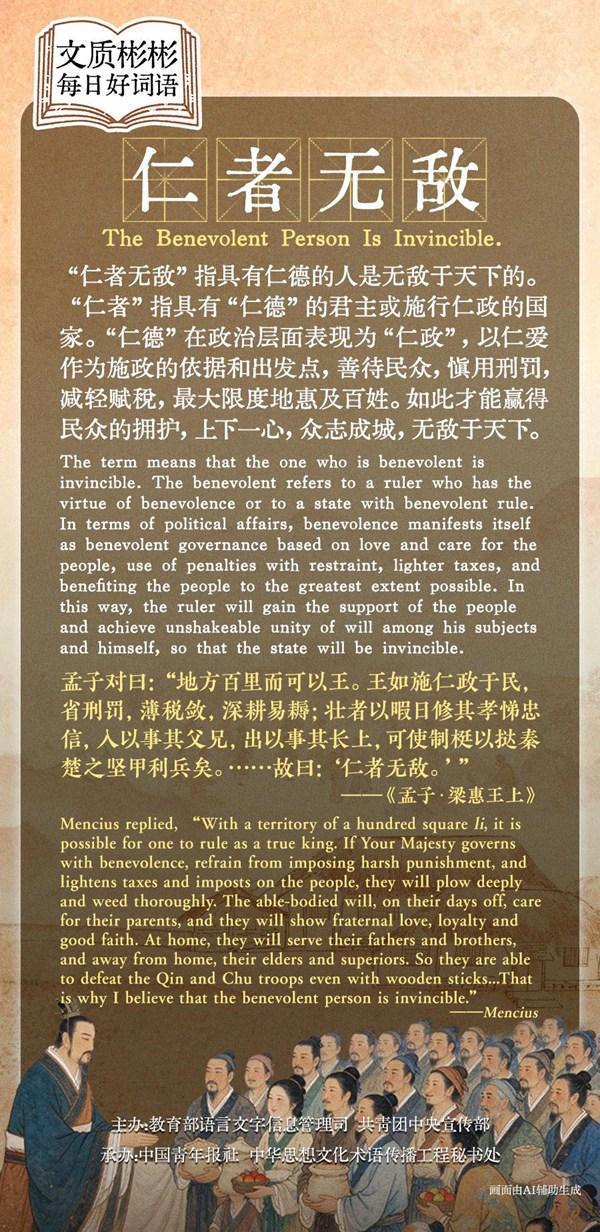
“仁者无敌”指具有仁德的人无敌于天下。“仁者”指具有仁德的君主或施行仁政的国家。仁德在政治层面表现为仁政,以仁爱作为施政的依据和出发点,善待民众,慎用刑罚,减轻赋税,最大限度地惠及百姓。如此才能赢得民众的拥护,上下一心,众志成城,无敌于天下。
The Benevolent Person Is Invincible
The term means that the one who is benevolent is invincible. The benevolent refers to a ruler who has the virtue of benevolence or to a state with benevolent rule. In terms of political affairs, benevolence manifests itself as benevolent governance based on love and care for the people, use of penalties with restraint, lighter taxes, and benefiting the people to the greatest extent possible. In this way, the ruler will gain the support of the people and achieve unshakeable unity of will among his subjects and himself, so that the state will be invincible.
引例
孟子对曰:“地方百里而可以王。王如施仁政于民,省刑罚,薄税敛,深耕易耨;壮者以暇日修其孝悌忠信,入以事其父兄,出以事其长上,可使制梃以挞秦楚之坚甲利兵矣……故曰:‘仁者无敌。’”(《孟子·梁惠王上》)(孟子回答说:“有方圆百里的土地就可以使天下归顺。君王如果对老百姓施行仁政,慎用刑罚,减少赋税,深耕细作,及时除草;使壮年男子能有空余时间修养自己孝顺父母、敬爱兄长、为人尽心、待人诚信的品德,在家能侍奉父母兄长,出门能侍奉尊长上级,这样即使他们拿着加工的木棒也能抗击装备精良的秦、楚军队了……所以说:‘具有仁德的人无敌于天下。’”)
Mencius replied, "With a territory of a hundred square li, it is possible for one to rule as a true king. If Your Majesty governs with benevolence, refrains from imposing harsh punishment, and lightens taxes and imposts on the people, they will plow deeply and weed thoroughly. The able-bodied will, on their days off, care for their parents, and they will show fraternal love, loyalty and good faith. At home, they will serve their fathers and brothers, and away from home, their elders and superiors. So they are able to defeat the Qin and Chu troops even with wooden sticks…That is why I believe that the benevolent person is invincible." (Mencius)
沈杰群 张玉佳来源:中国青年报
2026年10月21日 01版
 放大
 缩小
 全文复制
 上一篇
